
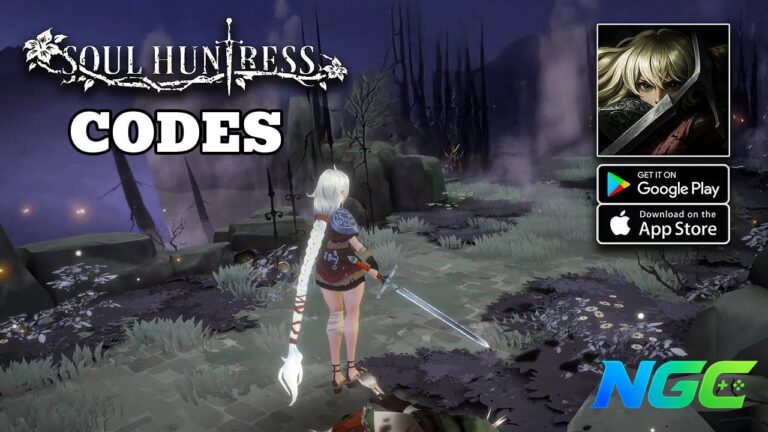
Soul Huntress is a dark fantasy action RPG where every dungeon run pulls you deeper into the collapsing Kingdom of Brynn. Shape-shifting monsters known as Shapers are stealing memories, replacing people, and spreading fear across the land. As a skilled Shape Hunter, your mission is to enter dangerous dungeons, defeat waves of enemies, collect powerful loot, and uncover the truth behind the Alpha Shaper.
All Working Soul Huntress Codes
Learn more about why a code may not work
Please let us know about any new or missing codes using the form below.Thanks for helping keep NewGameCodes up to date and accurate!
How to Get More Codes for Soul Huntress?
The easiest way to find new codes is to bookmark this page and visit it from time to time. We keep this list updated with the latest working codes as soon as they become available.
You can also follow the game on Facebook and Discord, where developers may post new codes during events, updates, and giveaways.
Codes Change History
Latest updates for this pageHow to Redeem Codes in Soul Huntress?
Follow these steps to redeem working codes and claim your rewards.Expired codes
These codes have expired and no longer workWhen will new codes for Soul Huntress be released?
Our prediction based on past updatesGuide & Tips for Soul Huntress
Helpful tips to progress faster, spend resources wisely, and avoid common mistakes.Soul Huntress punishes greedy attacks. In early game, treat every new enemy like a small boss: watch its wind-up, dash out, then punish after the attack finishes. This matters even more against groups, because one bad swing can leave you stuck while another enemy hits you from the side.
The mistake this avoids is playing it like a normal hack-and-slash. You are not trying to attack nonstop. You are trying to create safe windows, especially in boss fights and harder dungeon rooms where enemies hit harder than the early missions suggest.
Bows, shurikens, and magic are not just backup options. Use them to thin out groups, trigger safer engagements, or damage enemies before they reach melee range. If a room has traps or awkward enemy positions, start from range instead of charging in with a sword or axe.
This helps avoid one of the easiest ways to lose a run: walking into a crowded room and letting enemies surround you. Melee weapons are useful for burst damage, but ranged tools give you control, which is often more valuable than raw damage in procedural dungeon layouts.
Do not waste tools like Falcon Emblem or Seeds of Thorns on easy enemies. Falcon Emblem is better when you need extra pressure or distraction, while Seeds of Thorns are useful when you need to stop enemies from rushing you. Use them when the room is messy, not when the fight is already safe.
The mistake this avoids is treating utilities like random consumables. In Soul Huntress, a well-timed summon or trap can prevent damage, create breathing room, and make a dangerous pull manageable. That is much better than using them just because they are available.
If you use Flayer, lifesteal and wide-area damage make more sense because that hero benefits from staying active in fights. If you use Forester, summoning and healing support a safer style, so defensive or cooldown-focused choices can fit better. Your runes and talents should support the way your hero wins fights.
The mistake this avoids is copying generic damage builds. Damage is useful, but it is not always the correct first priority. A build that matches your hero’s strengths usually clears more consistently than a build with bigger numbers but no synergy.
For F2P and low-spend players, Blood Gems are too important to spend casually. If you are saving for a hero, avoid draining them on short-term convenience unless you are sure it helps your current progression. New heroes are expensive, so impulse spending can delay a real upgrade for a long time.
This matters because heroes are not just cosmetic choices. They change how you approach combat, survival, and build planning. The mistake is spending premium currency early, then realizing later that you are far away from the hero that actually fits your playstyle.
Damage Rune, Cooldown Rune, Crit Damage Rune, Lifesteal Rune, and Health Rune all push your character in different directions. Early on, use runes to fix your biggest problem: if you die too fast, Health or Lifesteal may help more than Crit Damage; if your skills feel too slow, Cooldown can matter more than another damage boost.
The mistake this avoids is upgrading whatever rune looks strongest on paper. Soul Huntress becomes harder through bosses, traps, ranged enemies, and longer fights, so the best rune is often the one that solves your current problem, not the one with the most exciting stat name.
As you move deeper into the game, mission difficulty can rise faster than your useful loot. If enemies start taking too long to kill or you are burning too many Health Flasks, slow down and improve your gear, runes, and talent setup before pushing higher difficulty again.
This is especially important before Apocalypse Mode or Endless Dungeon. Those modes reward better planning and stronger builds, but they also expose weak gear quickly. The mistake is assuming that progress always means selecting the hardest available mission; sometimes the faster path is farming a safer stage until your build catches up.